Polish Pavilion · Expo 2020
How do you introduce a country through an encounter rather than a presentation? For Poland’s pavilion at Expo 2020 Dubai, Tellart / Big Dreams collaborated with Science Now and Stellar Fireworks on exhibition narrative, concept strategy, and key experiences. The result placed hospitality, creativity, and human exchange at the heart of the visit.
Role: Tellart / Big Dreams led experience concept strategy within the collaborative exhibition team.
Expo 2020 Dubai · With Science Now and Stellar Fireworks
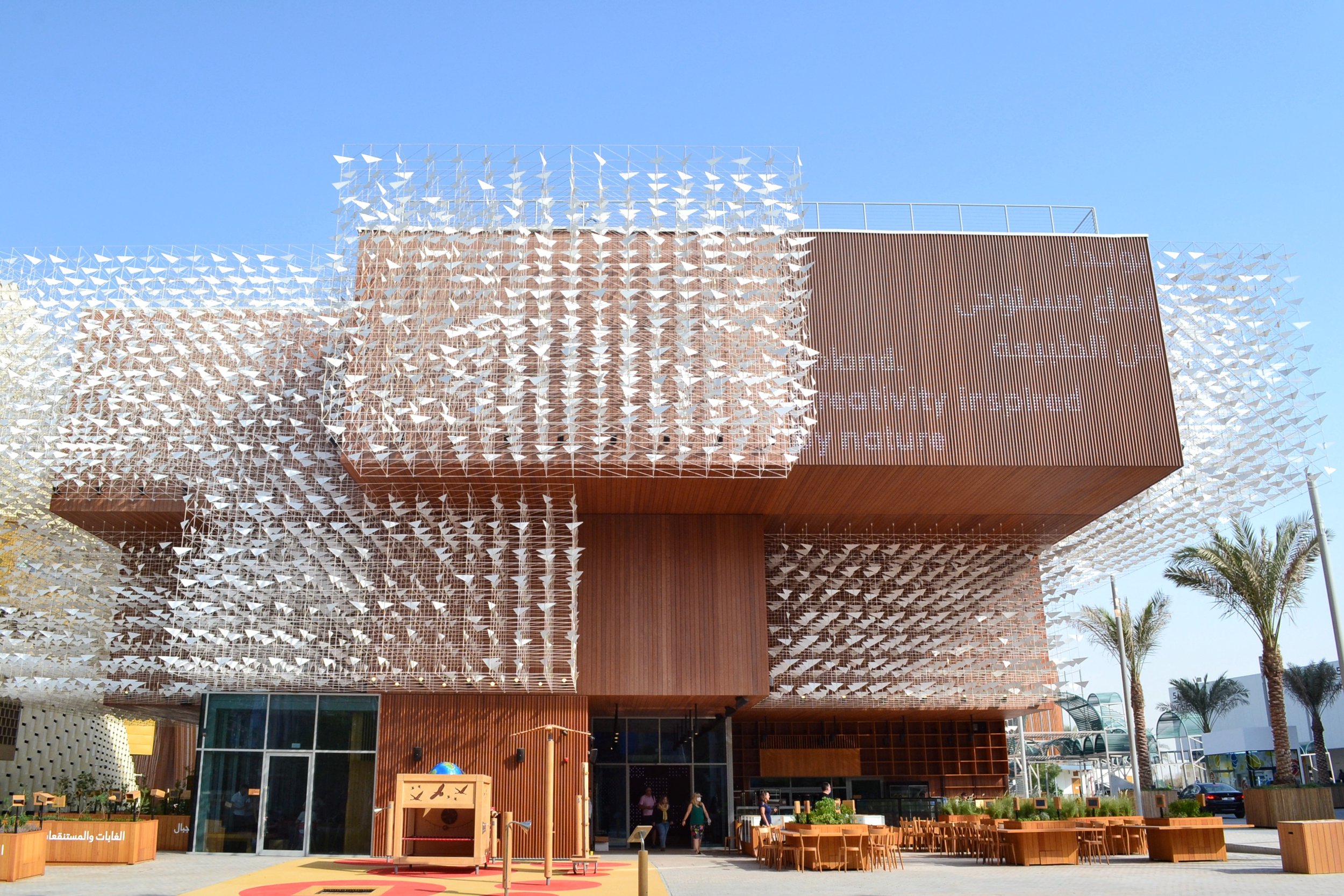
The pavilion’s timber architecture and bird-like kinetic sculpture established the theme “Creativity inspired by nature.”
The pavilion’s architectural and thematic concept, created by WXCA and Bellprat Partner, connected Poland’s natural environment with the mobility of people and ideas. The exhibition needed to bring culture, entrepreneurship, and technology into a coherent visitor journey. Pandemic precautions added another constraint: participation had to work without conventional touch-based interactives. The team shaped a narrative arc around different modes of engagement, technical realities, and visitor flow.
At the centre stood the Polish Table, a sculptural landscape of materials and creative practices. Rather than ask visitors to navigate another screen, the experience invited them to meet student hosts, exchange greetings, and discover stories together. Voice-activated trails of light travelled across the table and illuminated a rising tower. Scripts helped hosts welcome guests and introduce Polish greetings. Stories about artisans and materials offered paths into deeper conversation. More than 120 ash-wood blocks combined landscape forms with special modules in glass, ceramics, metal, and wood, bringing computational design into contact with craft.

Immersive forest imagery brought visitors into the pavilion’s account of Poland’s natural environment.

Visitors within the pavilion’s shared exhibition experience.
The completed visitor experience received five awards for exhibition design and brand communication, according to the published account. More importantly to the experience concept, participation was organised around a shared social act: being welcomed to a table. The project demonstrates how an exhibition can make room for conversation and cultural exchange rather than relying solely on informational media.